
As eco-friendly food packaging becomes the new standard, many restaurants, cafés, and catering businesses are asking the same question: which material is better for disposable tableware—bagasse or bamboo pulp ? Both are plant‑based, compostable alternatives to plastic and foam, but they are not identical. Each serves different needs in real foodservice operations.
If you are deciding between bagasse and bamboo pulp plates, bowls, and takeout containers, understanding their strengths and limitations will help you choose the right solution for your menu, budget, and brand position.
What Is Bagasse Tableware?
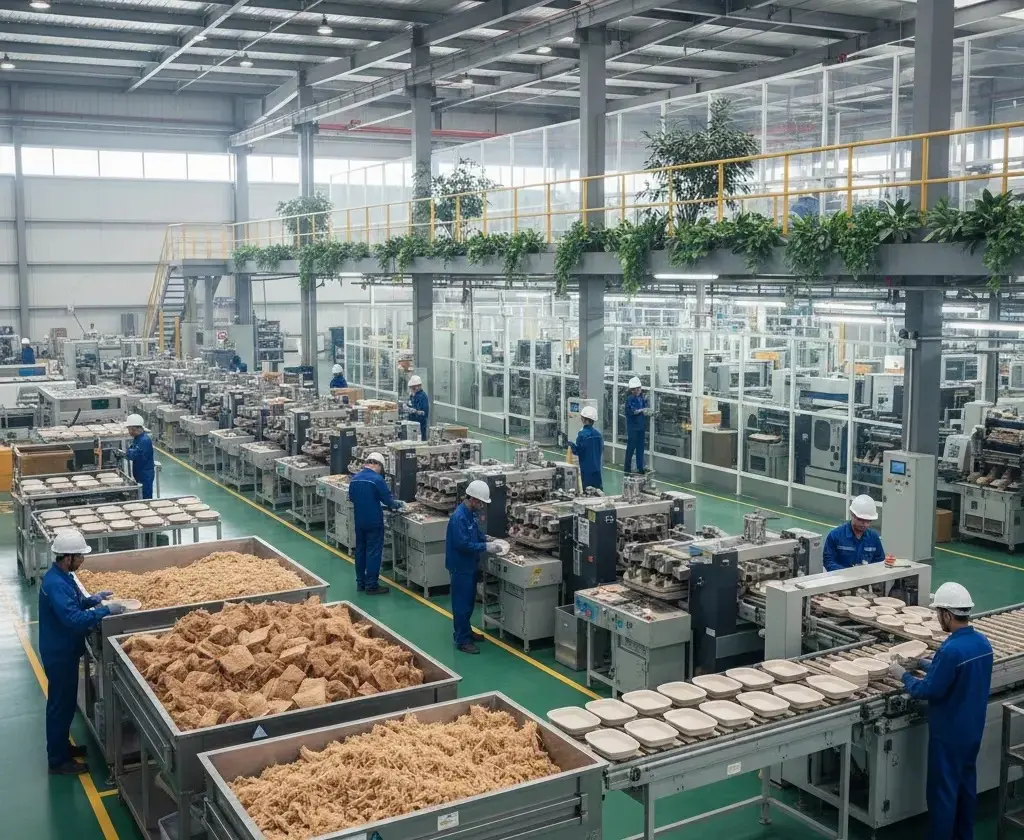
Bagasse tableware is made from the fibrous residue left after sugarcane juice extraction. Instead of being burned or discarded, this agricultural by‑product is collected, pulped, and molded into plates, bowls, clamshell containers, and trays.
Because bagasse uses an existing waste stream rather than a crop grown specifically for packaging, it has a strong circular‑economy story. It turns a low‑value by‑product into durable, compostable food packaging that replaces plastic and foam in everyday use.
What Is Bamboo Pulp Tableware?
Bamboo pulp tableware is made from processed bamboo fibers that are turned into pulp and then molded into plates, bowls, cutlery, and other food containers. Bamboo grows extremely fast, can be harvested repeatedly, and is widely recognized as a highly renewable resource.
Compared with bagasse, bamboo fibers are longer and denser, which gives bamboo pulp tableware a naturally stronger, more rigid structure and a smoother, more premium surface feel.
Environmental Impact: Waste Utilization vs. Fast‑Growing Resource
From an environmental perspective, both bagasse and bamboo pulp are a major improvement over petroleum‑based plastics. However, their sustainability stories are slightly different.
- Bagasse: Uses sugarcane processing waste, helping reduce agricultural burning and landfill waste while avoiding the need to grow extra crops just for packaging. It is compostable under industrial or well‑managed composting conditions and can break down within roughly 60–120 days, depending on product thickness and environment.
- Bamboo pulp: Comes from a fast‑growing, renewable crop that can be harvested multiple times, often without replanting. It also biodegrades and can be composted under suitable conditions, but the bamboo itself is not a “waste” stream—it is cultivated as a raw material.
In short, bagasse scores highly for turning waste into value, while bamboo pulp stands out for its rapid renewability and strong performance, especially when responsibly sourced.
Strength, Rigidity, and Real‑World Durability
In day‑to‑day foodservice, durability is often what operators notice first. Here, bamboo pulp has a technical edge, but bagasse is more than strong enough for typical single‑use applications.
- Bagasse: Offers medium‑to‑high rigidity suitable for most disposable plates, bowls, and clamshell containers. It performs well for everyday takeout, catering, and quick‑service meals, but under very heavy loads or long holding times, it can soften earlier than bamboo.
- Bamboo pulp: Provides higher and more stable rigidity thanks to its longer fibers and denser structure. It resists bending, cracking, and tearing better, making it ideal for heavy dishes, buffet plates, and reusable‑style items.
For operators, this means bagasse is a practical “workhorse” for most disposable uses, while bamboo pulp is the stronger choice when you need extra stiffness, repeated handling, or a more premium feel in the hand.
Oil, Water, and Heat Resistance
Grease and temperature performance are critical for hot, oily, or saucy foods. Both materials can be engineered for strong performance, but their natural behavior differs slightly.
- Oil and water resistance
- Bagasse: Naturally resists moisture and oil reasonably well. With proper thickness and, where allowed, suitable surface treatments, it handles soups, sauces, and takeout meals without quickly turning soggy.
- Bamboo pulp: Typically has better inherent grease and moisture resistance due to its fiber structure, making it especially suitable for very oily dishes or long delivery times.
- Heat performance
- Bagasse: Works well with hot foods and short microwave reheating, which makes it a good fit for most takeout and catering scenarios. Extended exposure to very high heat or heavy loads can lead to gradual softening.
- Bamboo pulp: Generally offers stronger heat resistance and stability, maintaining rigidity at higher temperatures or for longer periods, which is ideal for hot buffets, heavy entrees, or repeated reheating in some product designs.
If your menu is dominated by oily, heavy, or very hot dishes, bamboo pulp can offer extra safety margin, while bagasse remains more than capable for typical fast‑casual and delivery operations with balanced menus.
Look, Feel, and Brand Positioning
Packaging is also part of your brand. The way tableware looks and feels can influence how customers perceive your food and your commitment to sustainability.
- Bagasse tableware: Usually has a slightly textured, matte surface that communicates a natural, eco‑friendly image. It looks clean and modern, but it is typically positioned as a practical, down‑to‑earth solution rather than a luxury product.
- Bamboo pulp tableware: Often appears smoother, denser, and more refined, with a premium natural aesthetic that works well for upscale cafés, restaurants, and events. It can help elevate presentation and reinforce a high‑end, eco‑conscious brand message.
If your main priority is cost‑effective sustainability, bagasse is an excellent fit. If you want eco‑friendly packaging that also signals “premium” and pairs with a high‑value menu, bamboo pulp may be a better match.
Cost and Scalability for Foodservice
For many buyers, the biggest practical difference between bagasse and bamboo pulp is cost. Both materials require more investment than low‑grade plastics when you look only at unit price, but they differ significantly from each other.
- Bagasse: Because it uses low‑cost raw material and efficient molded fiber processes, bagasse tableware is generally more economical and better suited to high‑volume disposable applications such as quick‑service restaurants, school canteens, corporate cafeterias, and mass catering.
- Bamboo pulp: Production and finishing are more complex, and the material itself carries a premium, so unit prices are higher. It is often selected for targeted applications where stronger performance or premium appearance justifies the additional cost—such as upscale dining, branded events, and reusable‑style pieces.
If you need millions of pieces per year at competitive prices, bagasse usually offers a better cost‑to‑performance ratio. Bamboo pulp is more appropriate when you are willing to pay more to upgrade the customer experience and brand image in specific channels.
Which Material Is Right for Your Business?
Both bagasse and bamboo pulp tableware are strong, credible alternatives to plastic and foam, and both can support your sustainability goals. The best choice depends on your priorities:
- Choose bagasse if you want:
- A cost‑effective, high‑volume solution for everyday disposable tableware
- A strong circular‑economy story using agricultural waste
- Reliable performance for typical hot and cold takeout dishes
- Choose bamboo pulp if you want:
- Extra rigidity and durability for heavy, oily, or premium dishes
- A smoother, high‑end look and feel to match upscale branding
- Packaging that can be used in more demanding or semi‑reusable scenarios
Many foodservice brands combine both materials: bagasse plates and clamshells for large‑volume orders, and bamboo pulp items for selected signature dishes or premium events. By understanding the real‑world pros and cons of each, you can build a packaging portfolio that fits your menu, your customers, and your sustainability strategy.